


Essential Car Maintenance for Your Used Car in Minneapolis: An Expert Guide for Longevity
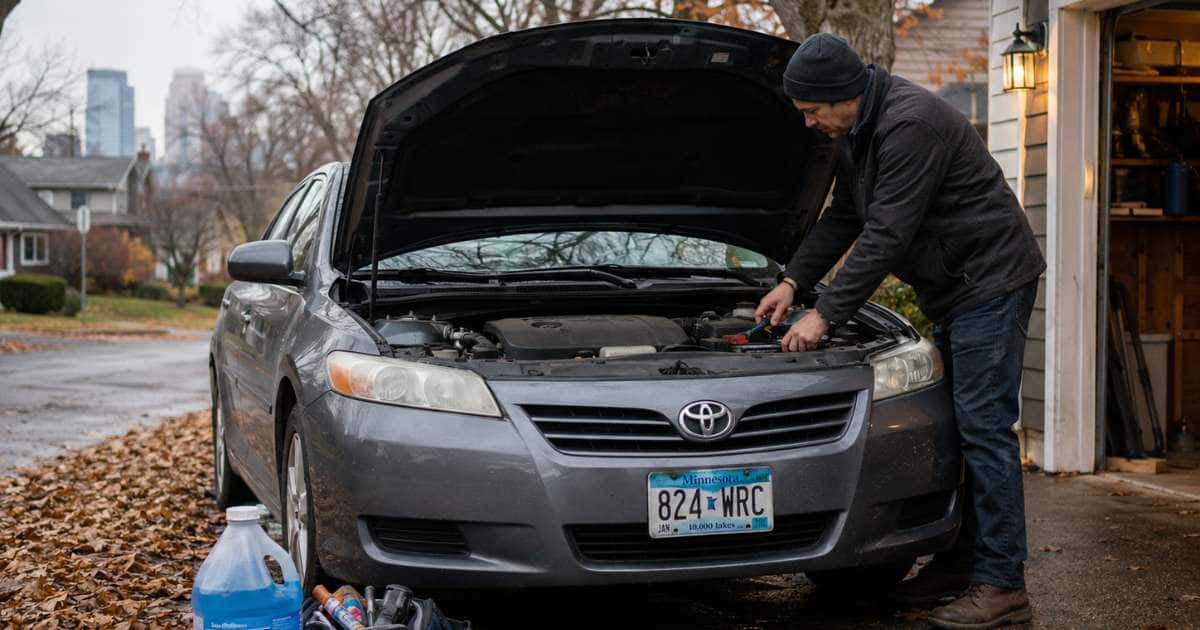
Maintenance for Minnesota Conditions
Why Minneapolis Is Unusually Hard on Used Cars
Minneapolis sits in a climate zone that punishes vehicles from both ends of the temperature scale. The combination of extreme cold, road salt, and heavy seasonal demands creates a maintenance environment that’s genuinely more challenging than most of the country.
How Harsh Winters Accelerate Component Wear
When temperatures drop below zero, nearly every system in your vehicle works harder than it was originally designed to. Engine oil thickens, batteries lose significant cranking power, rubber seals contract. Brake lines become more susceptible to corrosion from road salt exposure. That salt doesn’t just sit on the surface, it migrates into undercarriage components, wheel wells, and brake assemblies.
For used cars especially, salt exposure compounds whatever wear was already present before you bought the vehicle. A used car that’s been through several Minneapolis winters may have accelerated rust on brake rotors and weakened suspension bushings, both of which demand more frequent inspection than you’d need on a newer model in a milder climate. Fluid integrity suffers too.
Summer Heat and Stop-and-Go Traffic
Minneapolis summers bring their own stress. High temperatures accelerate fluid breakdown and push cooling systems to their limits, while tire pressure creeps beyond safe thresholds on hot pavement. Add the stop-and-go traffic common across the Twin Cities metro, and your transmission, brakes, and engine management systems are all working overtime during peak commuting hours on I-35W or 494. The thermal cycling between a January cold start and a July afternoon is significant: over time, expansion and contraction wears gaskets, weakens hose connections, and shortens fluid service intervals.
Oil Changes and Fluid Services: The Foundation of Used Car Longevity
No single maintenance habit does more to extend the life of a used car than consistent fluid management. This is especially true for higher-mileage engines, which are more sensitive to oil degradation than a low-mileage powertrain.
For winter driving, the manufacturer-recommended oil grade matters considerably. Winter-grade oil flows better during cold starts, reducing the dry-start wear that occurs in the critical seconds before oil pressure builds. If your vehicle has over 75,000 miles, ask a local mechanic whether a high-mileage formula makes sense for your specific engine.
Beyond engine oil, transmission fluid in an automatic should generally be inspected every 30,000 to 60,000 miles, though used vehicles with unknown service histories may need attention sooner. Coolant deserves particular attention in Minneapolis: a 50/50 antifreeze-to-water mixture provides reliable freeze protection through Minnesota winters. Brake fluid is hygroscopic, meaning it absorbs moisture over time, which lowers its boiling point and increases the risk of brake fade on icy roads. Replacing it every two years regardless of mileage is a widely recommended interval.
Ask About High-Mileage Oil
Inspect Automatic Transmission Fluid
Antifreeze-to-Water Protection
Recommended Brake Fluid Interval
Tires, Brakes, and Suspension: Safety-First Maintenance in the Twin Cities
These three systems are where neglected maintenance becomes a genuine safety issue. Minneapolis roads are unforgiving, and winter conditions combined with road damage accelerate wear on all three.
High-Priority Maintenance Tasks: Quick Reference
| Maintenance Task | Service Interval | Minnesota Urgency | Most Affected Vehicles |
|---|---|---|---|
| Oil and filter change | Per manufacturer spec | High – winter-grade oil critical | All vehicles, especially 75k+ miles |
| Tire rotation | Every 5,000–7,500 miles | High – pothole and salt wear | All vehicles |
| Battery test | Annually, before winter | Critical – cold reduces power | Vehicles 3+ years old |
| Brake inspection | Annually (spring priority) | High – salt accelerates rotor wear | All vehicles, especially post-winter |
| Coolant check | Every 2 years | High – freeze protection essential | All vehicles |
| Suspension inspection | Annually (spring priority) | High – frost heaves and potholes | Higher-mileage vehicles |
Tire Pressure, Tread, and Winter Tires
For every 10°F drop in temperature, tire pressure decreases by roughly one PSI. A tire at the correct pressure in October can be noticeably underinflated by January, reducing fuel efficiency and handling. Check pressure monthly during winter.
Minnesota law requires a minimum tread depth of 2/32 of an inch. New tires measure 10/32 to 12/32 of an inch, but per Consumer Reports, tires begin losing winter performance at half depth, which is 5/32 to 6/32 of an inch. Measure in the centermost tread groove for an accurate reading.
The case for dedicated winter tires is strong in Minneapolis. All-season tires perform acceptably in light conditions, but their rubber hardens in extreme cold. Winter tires use a softer compound that stays pliable below freezing, providing meaningfully better braking and cornering on snow and ice.
Brake and Suspension Inspection After a Minnesota Winter
Road salt aggressively attacks brake components. Some surface rust on rotors is normal and clears after a few applications, but vehicles that sit can develop pitting or uneven wear that affects stopping performance. Calipers are particularly vulnerable because salt can cause partial seizing, creating uneven pad wear and a pulling sensation during braking.
Minneapolis roads are equally hard on suspension. Potholes, frost heaves, and deteriorating pavement stress control arm bushings, ball joints, and struts. Tie rod ends take a beating too. If you notice a pull to one side or excessive bouncing, or hear clunking over rough pavement, get it looked at. Those symptoms lead to accelerated tire wear and reduced vehicle control when left alone.
Looking for a More Dependable Used Vehicle?
Browse current inventory or explore CarHop of Twin Cities financing options before visiting Blaine, Burnsville, Crystal, or Maplewood.
Battery and Electrical System Care for Cold-Climate Driving
Cold weather is a battery killer. A battery that functions fine in September may leave you stranded in February. For used car owners, the uncertainty around a battery’s age and history makes pre-winter testing even more important.
Most Minneapolis auto repair shops offer battery load testing, which measures actual cold cranking performance under simulated load. A battery showing reduced output should be replaced before winter. Corrosion on battery terminals increases resistance and can mimic the symptoms of a failing battery, so cleaning terminals is a quick and inexpensive step.
Confirm alternator output as well, since a weak alternator that manages adequately in summer may struggle during extended cold-weather driving with the heater, seat warmers, and defroster all drawing power simultaneously.
Seasonal Maintenance Checklist for Minneapolis Used Car Owners
Aligning maintenance with the natural transition points of fall and spring creates a reliable rhythm that’s easier to follow than tracking a dozen independent intervals.
Fall Prep: Getting Winter-Ready Before the First Freeze
-
✓
Change oil and filter using the manufacturer-recommended grade for cold weather. -
✓
Test the battery and clean terminal corrosion. -
✓
Check antifreeze concentration and ensure a 50/50 coolant-to-water mixture. -
✓
Inspect brake pads, rotors, and caliper function. -
✓
Assess tire tread depth and pressure; schedule winter tire installation before the first frost. -
✓
Replace wiper blades with winter-rated ones. -
✓
Top off washer fluid with a formula rated for freezing temperatures.
Spring Inspection: Catching Winter Damage Early
-
✓
Wash the undercarriage thoroughly to remove accumulated road salt. -
✓
Inspect brake components, exhaust, and frame areas for rust development. -
✓
Schedule an alignment check — even minor misalignment from potholes causes uneven tire wear. -
✓
Evaluate coolant, brake fluid, and power steering fluid condition. -
✓
Inspect suspension components for damage from frost heaves and impacts. -
✓
Swap back to all-season tires if you ran dedicated winter rubber.
Explore our financing options if you’re considering a newer used vehicle with a cleaner service history heading into the next season.
Warning Signs Every Used Car Owner Should Take Seriously
A used car communicates its problems before they become catastrophic. Knowing what to listen for makes the difference between a minor repair and a major breakdown.
Sounds and Vibrations That Signal Trouble
Grinding noise when braking means brake pads have likely worn through to the metal backing plate. That needs immediate attention. A vibration in the steering wheel at highway speeds usually points to wheel balance issues or uneven tire wear; address it promptly before further damage sets in.
Smells and Handling Changes to Watch For
A sweet, syrupy smell from under the hood often signals a coolant leak. It can escalate to an overheated engine quickly if ignored. If the car pulls to one side during normal driving, it may indicate alignment, brake, or tire issues, and it’s worth having evaluated before it worsens.
Performance Issues That Shouldn’t Wait
Sluggish cold starts could point to a weakening battery or oil that isn’t flowing properly in cold temperatures. Transmission slipping between gears warrants professional evaluation sooner rather than later; delayed service significantly increases repair costs.
The window between “something seems off” and “this is now an expensive problem” is often narrower than owners expect, especially with higher-mileage vehicles.
Keep Your Used Car Running Strong With CarHop of Twin Cities
Consistent service intervals, seasonal preparation, and prompt attention to warning signs all build on each other over time, keeping a vehicle dependable through Minneapolis winters and summers alike. Used car maintenance in Minneapolis doesn’t have to be overwhelming. It just has to be consistent.
If you’re ready to find a reliable used vehicle in the Twin Cities, we carry quality pre-owned inventory with in-house financing designed for buyers across the credit spectrum. Whether you’re near Blaine, Burnsville, Crystal, or Maplewood, there’s a CarHop of Twin Cities location close to you.
Contact us to get started today. Getting into a reliable vehicle is step one, and keeping it on the road for years to come is the part that truly matters.
0 comment(s) so far on Essential Car Maintenance for Your Used Car in Minneapolis: An Expert Guide for Longevity